Pages

Sunday, June 16, 2013

Typology (the theological kind)

Patheos blogger Joel Willitts nails what makes me so uneasy about typology:
But just recently I’ve come to realize what it is that makes me uncomfortable with much biblical theology today. I noticed it most clearly in two books on biblical theology published in the last year: Gentry & Wellum’s Kingdom through Covenant, and Goldsworthy’s Christ-Centered Biblical Theology.
Here’s my problem. These recent scholars, and a good deal many others, use typology as the preferred method for discovering unity. Typology is an interpretive move where the reader sees in an OT person or event a prefigurement (type) of something in the NT (anti-type), e.g. Moses and Jesus. While this is not necessarily problematic, the underlying assumption that is at work very commonly depreciates (at best!!) the earlier person/event in light of the later. As Matthew Boulton put it, “the occurrence of the latter seems to render the former either obsolete, no longer necessary or, at best, still venerable but nevertheless subordinate” (SJT 66[1]: 20).
Here’s my syllogism:
  • Most typological interpretation is supersessionistic.
  • Most biblical theology uses typology.
  • Most biblical theology is supersessionistic.
Here’s my problem. I don’t think the apostles were supersessionists. I don’t think this is how they read the OT. And it doesn’t appear to be the way they thought about its prefigurements. Consider John 1:16-17:
From his fullness we have all received grace upon grace; as the Law was given through Moses, so grace and truth came into being through Jesus Christ (CEB).
In this text the Evangelist is making a typological comparison between the grace given by God through Moses and that given through Jesus. In Jewish interpretation this is a classic qal va-homer (‘ the argument from the minor to the major ‘). For the logic to work, it would make no sense to downplay or to depreciate the former in view of the latter. Such a move would only depreciate the grace now given. In other words, the higher view one has of the grace given through Moses, the greater view one will have of the grace now in and through Jesus. Clearly in the comparison the latter (grace through Jesus) is related and dependent on the grace of the former (grace through Moses). One can only appreciate greatness of the latter in view of the former.
Can biblical theology be done without a supersessionistic application of typology?
The Biblical survey courses I took through my church last year made me acutely aware of this pitfall of typology. We would talk about how such-and-such old testament figure or story "points to Jesus" or "foreshadows" the gospel to the point where the Old Testament could seem like nothing but a literary device to support the New. The significance of these things and their ability to stand alone as theological statements are forgotten as they are considered to be in the Bible primarily to make Jesus look better, to "foreshadow Him", "contrast with Him", "heighten the tension", etc. When we start interpreting and explaining the Old Testament in terms of types like this, we see less of a God who actively, personally involves Himself in the history of Israel and more a God who manipulates lives and kingdoms according to His whims like characters and plotlines in His next bestselling novel. This is an even less appealing picture of God than the bloodthirsty tyrant He is often caricatured as because it is not only amoral and borderline malicious, it is impersonal and detached.

Typology is ultimately a kind of analogical thinking, whereby we set up an analogy between an Old Testament figure and Jesus and then see the figure's significance in terms of this analogy, i.e. how we see Christ in the story. This is where the difference between the Bible being primarily about Jesus and it being entirely about Jesus comes into play. If we view the Old Testament typologically (as a series of reflections or foreshades of Christ), then it ultimately becomes highly redundant and repetitious, because the New Testament is much more clearly about Him anyway. Practically, this can play out in two ways. Because the Old Testament does, in fact, have unique knowledge to offer besides just saying things about Christ, typology tends to either downplay and marginalize these parts of the stories relative to the Christological parts, or they may be twisted to fit the typological rubric.

A big example is Adam, especially because Paul makes the typological relation explicit in Romans 5:14. Jesus is therefore commonly described as the "second Adam", but more accurate would be to say that Adam is considered the "proto-Christ", the reason Jesus had to come and die to atone for sins. I don't deny that Paul saw Genesis 1-3 in this light, but the danger comes when we make this our entire lens for seeing Adam. Not only does this make a historical Adam much harder to let go of, it makes it almost impossible to read Genesis 1-3 in any other way (e.g. as a parallel to the history of the Israelites, or a story about wisdom, or in general anything like how its original audience would have read it).

A strictly typological approach to Genesis 1-3 also leads to hermeneutical violence like detaching the curses in Genesis 3:14-19 from their immediate context to recontextualize them in terms of the "gospel narrative". So Genesis 3:15, the "protoevangelium", is seen as an actual predictive promise of the incarnation and gospel delivered to comfort Adam and Eve on their expulsion from the garden (rather than one that Jesus retrospectively fulfilled), and the curses on the man and woman are interpreted to mean the inauguration of original sin and the "Fallen World", even though no mention is made of the couple as the cause of anything bad anywhere in the OT after this and Adam's curse has nothing to do with receiving a sinful nature.

I hope I wasn't too hard on typology in general with that example. I am not saying that any exercise of theologically or thematically relating Old Testament figures with Jesus is bad. In keeping with Willitts' quote, what concerns me is when the Old Testament figure is devalued, rendered inferior, or diminished in significance by this comparison. Paul's typological comparison of Jesus with Adam served to help Jewish readers familiar with Genesis to appreciate Jesus more by His "fulfilling" the mistakes of Adam as well as to see Adam in a new way (the lack of mentions in the Old Testament indicates that the Jews didn't see Adam anything like we do now). The problem arises when we get so caught up in analogy-making that we see this new way as the only way to view Adam, glossing over the parts of the Bible that don't match this view or viewing them as insignificant compared to the typology-friendly parts. The Bible does not simply present one, "divine" perspective on the subjects on which it touches, but a tapestry of diverse (nonetheless inspired) human ones. Typology, done right, recognizes and celebrates this multivocality.

Tuesday, June 11, 2013

Slavery, misogyny, and other adventures in the world of the Old Testament

Fun Stuff

A commentor on my post on Biblical literalism brought up ten of the passages in the Old Testament that give him the most trouble. I'll lay them all out for you (I'm surprised he didn't mention anything from Joshua; there's some seriously juicy material in there!):

Exodus 21:7-11:
When a man sells his daughter as a slave, she shall not go out as the male slaves do. If she does not please her master, who has designated her for himself, then he shall let her be redeemed. He shall have no right to sell her to a foreign people, since he has broken faith with her. If he designates her for his son, he shall deal with her as with a daughter. If he takes another wife to himself, he shall not diminish her food, her clothing, or her marital rights. And if he does not do these three things for her, she shall go out for nothing, without payment of money.
Exodus 21:20-21:
When a man strikes his slave, male or female, with a rod and the slave dies under his hand, he shall be avenged. But if the slave survives a day or two, he is not to be avenged, for the slave is his money.
Exodus 21:32:
If the ox gores a slave, male or female, the owner shall give to their master thirty shekels of silver, and the ox shall be stoned.
Leviticus 21:18-20:
And the LORD spoke to Moses, saying, "Speak to Aaron, saying, None of your offspring throughout their generations who has a blemish may approach to offer the bread of his God. For no one who has a blemish shall draw near, a man blind or lame, or one who has a mutilated face or a limb too long, or a man who has an injured foot or an injured hand, or a hunchback or a dwarf or a man with a defect in his sight or an itching disease or scabs or crushed testicles."
Leviticus 25:45-46:
You may also buy from among the strangers who sojourn with you and their clans that are with you, who have been born in your land, and they may be your property. You may bequeath them to your sons after you to inherit as a possession forever. You may make slaves of them, but over your brothers the people of Israel you shall not rule, one over another ruthlessly.
Numbers 31:17-18:
Now therefore, kill every male among the little ones, and kill every woman who has known man by lying with him. But all the young girls who have not known man by lying with him keep alive for yourselves.
Deuteronomy 21:10-14:
When you go out to war against your enemies, and the LORD your God gives them into your hand and you take them captive, and you see among the captives a beautiful woman, and you desire to take her to be your wife, and you bring her home to your house, she shall shave her head and pare her nails. And she shall take off the clothes in which she was captured and shall remain in your house and lament her father and her mother a full month. After that you may go in to her and be her husband, and she shall be your wife. But if you no longer delight in her, you shall let her go where she wants. But you shall not sell her for money, nor shall you treat her as a slave, since you have humiliated her.
Deuteronomy 22:13-21, 28-29:
If any man takes a wife and goes in to her and then hates her and accuses her of misconduct and brings a bad name upon her, saying, ‘I took this woman, and when I came near her, I did not find in her evidence of virginity,’ then the father of the young woman and her mother shall take and bring out the evidence of her virginity to the elders of the city in the gate. And the father of the young woman shall say to the elders, ‘I gave my daughter to this man to marry, and he hates her; and behold, he has accused her of misconduct, saying, “I did not find in your daughter evidence of virginity.” And yet this is the evidence of my daughter’s virginity.’ And they shall spread the cloak before the elders of the city. Then the elders of that city shall take the man and whip him, and they shall fine him a hundred shekels of silver and give them to the father of the young woman, because he has brought a bad name upon a virgin of Israel. And she shall be his wife. He may not divorce her all his days. But if the thing is true, that evidence of virginity was not found in the young woman, then they shall bring out the young woman to the door of her father’s house, and the men of her city shall stone her to death with stones, because she has done an outrageous thing in Israel by whoring in her father’s house. So you shall purge the evil from your midst.
If a man meets a virgin who is not betrothed, and seizes her and lies with her, and they are found, then the man who lay with her shall give to the father of the young woman fifty shekels of silver, and she shall be his wife, because he has violated her. He may not divorce her all his days.
Deuteronomy 25:11-12:
When men fight with one another and the wife of the one draws near to rescue her husband from the hand of him who is beating him and puts out her hand and seizes him by the private parts, then you shall cut off her hand. Your eye shall have no pity.
Judges 21:20-23:
And they commanded the people of Benjamin, saying, “Go and lie in ambush in the vineyards and watch. If the daughters of Shiloh come out to dance in the dances, then come out of the vineyards and snatch each man his wife from the daughters of Shiloh, and go to the land of Benjamin. And when their fathers or their brothers come to complain to us, we will say to them, ‘Grant them graciously to us, because we did not take for each man of them his wife in battle, neither did you give them to them, else you would now be guilty.’” And the people of Benjamin did so and took their wives, according to their number, from the dancers whom they carried off. Then they went and returned to their inheritance and rebuilt the towns and lived in them.

Wait, what?

If you're a Christian, verses like these might make you feel very uncomfortable and may even become a significant source of doubt. If you're not a Christian, you might point to verses like these (probably in in the more archaic language of the KJV) to show why! Lots of Christians, though they would never say as much, maintain a kind of separation from the "angry, vengeful" God of the Old Testament with His crazy laws and genocide and the "loving, forgiving" God we see in the New Testament through Jesus, picking the parts of the Bible that best fit with their cultural and moral norms to learn from while treading very carefully in Old Testament territory, sticking with "safe" stories like Genesis 1-3, the Ten Commandments, the (non-imprecatory) Psalms, or Messianic prophecies or presenting cleaned-up, Sunday school-ready accounts of such gems as the flood, the life of Abraham, or the exodus. The Old Testament is a potential source of embarrassment for them, so they do their best to sweep it under the rug. When confronted (probably by a skeptic with no sympathy for their faith), they get evasive or may say something to the effect that God was different "back then".

Christians who accept that both Testaments depict the same God and try to work both into their faith instead of minimizing one face an uphill battle. The simple answer, which is heavily informed for me by Peter Enns' incarnational model of Scripture, is that the Bible depicts a transcendent, timeless God speaking into specific, temporal human contexts and moral vocabularies that are far removed from our own. Obviously, cultural norms and morality in the Ancient Near East (ANE) are very different from our own, so it's important to draw comparisons between the Israelites and their contemporary neighbors, not between "backward ancient people" and twenty-first century western civilization in such a way that God seems similarly dull and backward for interacting with them. In this light, the treatment of women, slaves, and the poor dictated in the Mosaic covenant was progressive when understood in its context. There is apparently not one "right" way that society is always supposed to be that the Bible espouses from cover to cover, so let's not fault the OT for not depicting a "perfect" society.

I can understand how this can seem unconvincing. This doesn't really seem to answer the obvious questions: how can God not only tolerate but make provisions for slavery, draconian punishments, or misogynistic practices in the law He gives? It seems like a cruel joke to us to say that the Mosaic law was "progressive" because it mandated good treatment of slaves while still upholding the institution of slavery, or that it gave women some rights while still treating them largely like property. As soon as Christians start arguing that slavery is not always inherently evil, you can almost hear people stop listening. (Bear in mind that the ancient practice of slavery was drastically different than the racially-motivated colonial-era slavery we now associate with the term)

But again, these doubts largely arise from the tension between the culture and morality depicted in the Old Testament and our modern culture. Let me quote myself on this kind of imperialism:
When we clearly spell out the kind of moral expectations for the Bible this kind of trans-cultural comparing implies, the absurdity becomes more evident--how dare God command Abram to go to Canaan without first having him free all his slaves, rehire them as paid laborers with benefits, anti-discrimination policies, and minimum wage, accept total gender equality with his wife and the other women in his household, renounce the barbaric culture of clan rivalry and warfare he was steeped in, see all the gods of the surrounding pagan tribes as primitive superstition, etc...
How would you expect God to relate to an ancient people, if not something like this or what we actually see in the Old Testament? When a preschooler in my Sunday School class draws a talking mountain, I don't tell her that mountains can't talk and aren't alive; I just tell her that it's cool and that she's a good artist. She'll learn about mountains later. This in no way invalidates the fact that I know perfectly well that mountains can't talk. I think something analogous happens between us and God, must happen because the difference between us and Him is much deeper than the one between me and a four-year-old.

Let me try to approach the problem from another angle. Imagine, if the Bible were written today rather than thousands of years ago, what kinds of things in it might raise some eyebrows in a few thousand years? A future reader of a Bible written today might ask, "How could a good God still let His people keep using money? Or use such an impersonal, dehumanizing form of communication as the internet? How could He let them treat dolphins and chimpanzees as sub-persons?" (Let me stress that futurism is not a talent of mine)

Just as the existence of slavery or the primacy of men was uncontroversial in ancient Palestine, so things that even diehard social activists take for granted today might seem unthinkable to future audiences. We always expect God to act in the Bible according to our current moral standards, never questioning whether they are really perfect enough to expect God to conform to them. We can't imagine how He, being so perfect, can tolerate the evils that are considered "normal" in the cultural context the Hebrews are situated in while in covenant with them, never wondering if He might be doing the same thing with us. Remove the plank in your own eye first.

Dehistoricized Abstract Ethical Judgments

Let me propose an even more radical thesis. What if God's righteousness can't be encompassed or summarized by ethical propositions or simple value judgments like "all men and women should have equal rights" or "one human owning the rights of another is unethical"? A common conception among Protestants that I once held is that the commands God gives us, whether in the laws of the Mosaic covenant or the teachings of Jesus, are "good" not arbitrarily but necessarily because they are based on God's eternal, unchanging character or nature. In other words, God's character readily supports the deduction of moral precepts, and His righteousness easily distills down to a series of do's and don'ts that, as we become more like Him, we will live by. A bit more extremely, God's character consists of a series of moral precepts.

Aside from the fact that this view completely fails to account for all the times God's commands change (the Jewish dietary restrictions and sacrificial laws are two simple examples), this view also conflates an effect of righteousness (moral precepts and right judgments) for righteousness itself, which I don't think is biblical. God gives ethical commands to various people at various points in the Bible, but we must not think that these commands are somehow essential to His true, unchanging nature. God's righteousness runs deeper than the laws and teachings by which it manifests itself. N.T. Wright writes on a recent Q&A on Rachel Held Evans' blog: "Part of the problem the way the question is posed is by assuming that we can abstract an ethical ideal from one part of scripture and use it to judge the actions of God in another part of scripture, as though scripture were given us so we could form such dehistoricized abstract ethical judgments! Life just isn’t like that." (See also a longer article by him on the tension between the testaments)

I love his phrasing, "dehistoricized abstract ethical judgments". We Christians are strangely eager to reduce our faith to a list of do's and don'ts, even if we don't think doing the do's and don'ting the don'ts will save us. Donald Miller in his book Searching for God Knows What strongly emphasizes how Christianity comes down to a relationship, not a formula. But cases like doubts about these OT passages makes me wonder if moral formulas, even applied with the best of intentions (e.g. trying to "discern God's will" by deriving ethical precepts from scripture to apply to a situation) might be distracting. If God made us to be primarily relational beings, not moral ones. If we're more concerning with knowing what's right and what's wrong than with knowing God Himself. And then Genesis 2:16-17 finally made sense to me:
And the LORD God commanded the man, saying, “You may surely eat of every tree of the garden, but of the tree of the knowledge of good and evil you shall not eat, for in the day that you eat of it you shall surely die.”
I set down Dietrich Bonhoeffer's Ethics in frustration as he went on about how knowledge of good and evil and knowledge of God were mutually exclusive, but now I understand. The higher and more sophisticated an idol is, the harder it is to identify as such, and Biblical morality--seeking God's will for our lives rather than God Himself--is one of the highest idols there is.

Sunday, June 9, 2013

Book Reports--May 2013

Heart-Shaped Box, by Joe Hill

I got into Joe Hill's fiction after the comic-store employee who checked out some of my Locke and Key volumes recommended him. This is a ghost story about a washed-up former death metal star with a collection of macabre oddities who purchases a dead man's suit on an online auction that turns out to come with his soul thrown in, free of charge. Though it starts a bit slowly and isn't as addictive as Locke and Key, it demonstrates Hill's skill as a talented author who can write a gripping tale with or without fancy pictures to help him.

Mere Apologetics, by Alister McGrath

Yes, Alister McGrath is indebted enough to C.S. Lewis to name two of his books in the style of Mere Christianity. This is a skillfully written, (too) short overview of the Christian study of apologetics. I wish McGrath went into more detail, but what he did put into this book is brilliant and I found myself thinking often, "This is exactly what I think but expressed much better." He provides a theological basis for apologetics, distinguishes apologetics and evangelism, and makes the necessary point that apologetics is much more than the thoroughly modernist development of rational arguments to try to bring people to faith by logic. He also mentions the importance of contextualizing your discourse to your specific audience, with examples from the New Testament and from the modern philosophical landscape of modernism and postmodernism. There are also plenty of offhand (but hard-hitting) critiques of the new atheism movement, which seem to be a common feature of his writings. I would have liked a slightly meatier book (which I'm sure McGrath is capable of writing), but this is a high recommendation for anyone looking to get into apologetics. I wish it had been available my seventeen-year-old self when I was making my first foray into the field.

Prototype, by Jonathan Martin

This is a new book by Pastor Jonathan Martin of Renovatus Church, one of my favorite pastors to listen to online. The subject matter is kind of scattershot, but overall it's Martin unpacking how he "does" the gospel as a pastor. It's honest and hard-hitting, both theological and practical. He draws all kinds of parallels between us and Jesus, casting Him not just as our Savior to believe in (or just believe when He commands things), but as our "prototype", the perfect example of the new kind of life we of the church are born into. He asks rhetorically, "What if the ultimate goal of everything Jesus said and did was not just to get us to believe certain things about Him, but to become like Him?". He starts off with of a story of his memory of endlessly riding a bike in circles as a boy, moments which he later came to recognize as times of deep, unconscious communion with God. Jesus, he says, never forgot who He was: God's beloved Son. My description isn't doing this book justice. Any Christian author can write doctrinally about how God loves us, we're supposed to find our identity in Him, we're supposed to be like Jesus, and so on. Martin's gift, which comes out in this book and even more in his preaching, is to breathe life into doctrine by powerfully relating it to experiences not only in his own life, but in yours as well. Even if you think you've heard the basics of "the gospel" before, the chapters grab your attention, capture your imagination, and get you to think about (and apply!) the Christian faith anew.

Surfaces and Essences, by Douglas Hofstadter and Emmanuel Sander

I didn't so much choose this book as it chose me, sitting invitingly on a bookshelf in London. I decided to buy it almost immediately, not caring about how I would fit it into my carry-on suitcase later. Written by the author of Gödel, Escher, Bach: An Eternal Golden Braid, a lengthy and wandering discourse on cognition, language, logic, music, art, mathematics, self-reference, and artificial intelligence, I knew that if this book was even half as good it would forever change the way I thought and saw the world.

Surfaces and Essences is set up around the central thesis that analogy is the core of all thinking, and also that analogy and categorization (a process more traditionally thought of as central to human cognition) are really the same. The authors then proceed to systematically argue this thesis through an abundance of thought experiments, examples, anecdotes, and (of course) analogies. In the first few chapters they show how words, even simple and concrete ones (like  "concrete") can have multiple layers of meaning (or levels of abstraction) corresponding to literal or analogical uses. This is also true of phrases like "sour grapes", "hit the nail on the head", "Jewish mother", or "spill the beans", which really describe complex concepts that we relate (often unconsciously) to situations by analogy-making. Similarly, they point out "invisible analogies" like similarities we observe between situations that appear very different on the surface, revealing a "swarm of resemblances buzzing inside our heads".

They provide a fascinating mental model that resonated with me, picturing the landscape of concepts as a multicolored landscape with different words in different languages corresponding to points and territory in this landscape. A given word in one language may not have a direct parallel in another but may instead have its "territory" shared between multiple words, like the English "time" being split into two French translations, one for a temporal point of occurrence and one for a duration. (I should mention that both authors are bilingual and in fact wrote two originals of the book in English and French, so they do lots of comparing of these languages) Something similar happens in Greek, with the words χρονος and καιρος respectively meaning a specific time or duration and a more general age or era.

Further, they point out that there are large lacunae (empty spaces) in the conceptual space, meanings that no language has a word for. Using compound words or phrases extends the ability of a language to reach more concepts, but nonetheless there will still be limits to what the lexical terms of a given language can cover. Whereas an English speaker may have a convenient idiom to convey the concept of "the tail wagging the dog", a French speaker has no similarly concise way of expressing this without explaining it in much more length. Or on the other hand, French has the phrase "avoir l'esprit d'escalier", which translates to "to have the spirit of staircase", meaning to come up with the ideal retort to someone at a party as you are on the stairs leaving the party, which has no easy English equivalent. (Unless we start calling it "staircase wit") Sometimes speakers of one language will see the usefulness of a phrase from another and adopt it wholesale, like "deja vu".

I won't summarize the whole book, but once the authors get their basic concept of analogy-making very thoroughly established, they treat other interesting topics like layers of abstraction and inter-category sliding (fascinating subjects for me), how analogies manipulate us, and how we manipulate analogies. The last chapter is devoted to "analogies that shook the world" like the process by which Einstein formulated his theory of mass-energy equivalence (better known as E = mc2). This book isn't for everyone, but it is one of the most fascinating and persuasive works on language, cognition, metacognition, and meaning I've read in a long time, and I highly recommend it to anyone who shares any of these passions.

Scholasticism: Personalities and Problems of Medieval Philosophy, by Joseph Pieper

I picked up this book from Half-Price Books on a whim, but it has been quite a pleasant (if quick) read. He starts by explaining how even in the name, we often see the "Middle Ages" as a kind of boring transitional period between antiquity and the Renaissance before launching into an interesting narrative of some of the most prominent thinkers that shaped this period of history. Boethius, Anselm, Abelard, and Bernard of Clairvaux get fairly extensive treatment; Thomas Aquinas, surprisingly, does not, though he is frequently mentioned in relation to others. It's an interesting look at the evolution of theology and philosophy from the start of the church to the Renaissance. Particularly the evolution of the relationship between faith  and reason, which began as a simple unions with Boethius and became progressively more complex leading up to the Renaissance as the two began to part ways.

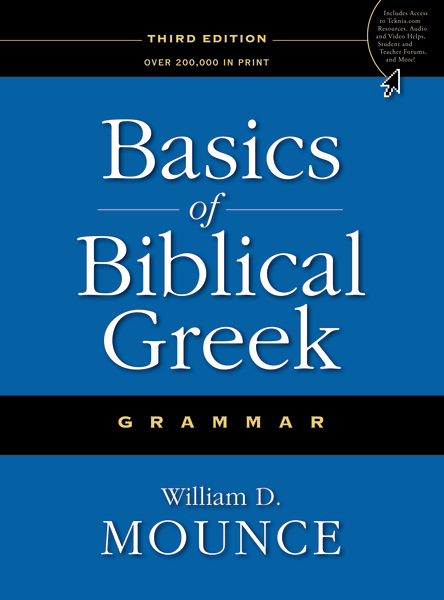
And, of course, the reason I won't be reading many other books this summer...


Apparently, Biblical Greek is blue.

Linguistic Ambiguity and Paradox

Have twenty minutes? Read this essay by Margaret Wertheim; it's the most interesting this I've read in weeks. Don't have time? Stay up twenty minutes later or something. It's worth it.

Summary (for those who didn't read it)

Wertheim has extensive experience in both the sciences and in the arts and brings both fields to bear. She describes the Platonist assumptions that underlie much of modern physics: that physics is a way of objectively describing "the way things are". During the Scientific Revolution nature was thought of as a "book" written by God in the language of mathematics which we, by the discovery of scientific "laws", are able to know. Though the explicit linkage between physics and theology has since dried up, the metaphor of delving into the "mind of God" continues. Current tensions in physics like the wave-particle duality--the tendency of photons, electrons, etc. to behave like waves and particles simultaneously--or the seeming incompatibility between the branches of physics pertaining to very large scales (general relativity) and very small ones (quantum mechanics) are seen as thorns in the side of the quest for an all-encompassing "theory of everything", tantamount to Galileo's "cosmic book", and many religious physicists continue to see a strong linkage between their faith and their work.

Wertheim contrasts her experiences serving on two panels: one with a cosmologist who saw physics in this way, as "a progression towards an ever more accurate and encompassing Truth", and another with a Lewis Carroll scholar who viewed mathematics as playful storytelling and mythmaking with little connection to reality. She here highlights a divide in academics' thinking about mathematics: scientists tend to see the correspondence between equation and reality as so reliable that the mathematics is allowed to proceed ahead of experience and intuition as our tool for finding "the way things are", leading us to counterintuitive (and impossible-to-test) theories to make sense of the math like the many-worlds hypothesis. She says, "what is so epistemologically daring here is that the equations are taken to be the fundamental reality. The fact that the mathematics allows for gazillions of variations is seen to be evidence for gazillions of actual worlds." Meanwhile, humanities scholars see this thinking as naive and disconnected from what is truly "real".
Duck or rabbit?
She ties this in intriguingly with a book called Purity and Danger by Mary Douglas, which ends with some theory about language, noting that all languages parse the world into discrete categories. For example, we categorize animals between categories like "mammals", "reptiles", "birds", "arthropods", and so on. But then we run into animals that refuse to follow these categories, like the pangolin, echidna, or platypus. Or consider the above optical illusion: is it a duck or a rabbit? Our brains flip between categorizing the same image in two different ways, trying to resolve the ambiguity because it's easier to just pick one than not categorize the image at all.

Wertheim notes the parallels between these linguistic paradoxes and issues in physics like the wave-particle duality:
As Douglas sees it, cultures themselves can be categorised in terms of how well they deal with linguistic ambiguity. Some cultures accept the limits of their own language, and of language itself, by understanding that there will always be things that cannot be cleanly parsed. Others become obsessed with ever-finer levels of categorisation as they try to rid their system of every pangolin-like ‘duck-rabbit’ anomaly. For such societies, Douglas argues, a kind of neurosis ensues, as the project of categorisation takes ever more energy and mental effort. If we take this analysis seriously, then, in Douglas’ terms, might it be that particle-waves are our pangolins? Perhaps what we are encountering here is not so much the edge of reality, but the limits of the physicists’ category system.
She is suggesting another possible approach to paradoxes in physics: rather than attempting to resolve the apparent contradiction between quantum mechanics and relativity, or between light being a wave or a particle, Wertheim wonders if the categories dictated by the language of physics we have, combined with the rejection of contradiction as unacceptable in the "mind of God", might be leading us to ask the wrong questions. Perhaps by trying to cram photons into the wave-particle spectrum we are missing something. "To put this into Douglas’s terms, the powers that have been attributed to physicists’ structure of ideas have been overreaching. ‘Attempts to force experience into logical categories of non-contradiction’ have, she would say, inevitably failed. From the contemplation of wave-particle pangolins we have been led to the limits of the linguistic system of physicists."

Commentary

The comments on the Reddit thread by which I found this essay criticize it for being overly dismissive and pessimistic about scientific progress. I agree in that Wertheim doesn't really try to offer a constructive solution, but simply thinks scientific inquiry has reached a barrier: "Will we accept, at some point, that there are limits to the quantification project, just as there are to all taxonomic schemes?" What Wertheim misses is that this ambiguity is an artifact only of our language, not of our minds, which are not bound to the symbol-concept mapping of any one language or even, necessarily, by the need to fit everything into a single clear-cut category. If our current classification scheme is inadequate, we can find a better one. The conclusion I would tentatively draw from the wave-particle duality is not that it is an ambiguity impossible to resolve conclusively, but that our categories of "wave" and "particle" themselves may need to be rethought into something stranger. (I'll leave how to do this and keep the results meaningful and applicable to the physicists)

Of course, I can't help but try to relate this subject to theology. Like with physicists, theologians' thinking can easily become caught on simplistic dualities, categories, and spectra that don't fully describe the more complex "way things are". These things can be useful mental stepping stones for trying to wrap our brains around a complex subject (and there is no more complex subject than God), but allowing them to define theological reality to our thinking leads to dead ends, endless debates, and wondering why-can't-they-just-see-it-my-way. I'm sure you can provide your own examples of this, but a few that readily come to my mind would be Calvinism and Arminianism, asking whether salvation is by faith or by works (usually before affirming that it's by faith alone), and asking whether it's a sin to do ____. I call this allowing of one perspective to crowd out others that aren't necessarily incompatible "totalization".

Because theology is the study of an infinite, transcendent Subject, it will always be incomplete. I think this is why I find it so much more exciting than my field of undergraduate study, which being a manmade subject has relatively little in the way of unanswered, weighty questions besides ones that intersect with mathematics like whether P equals NP. This continual incompleteness means recognizing that no theory of atonement, of salvation, of Trinity, etc. can ever totally describe these weighty subjects or definitively box up our discussion of them (and that's a good thing!). Let that be a reminder to keep your mind open to truth and always learning.

Saturday, June 8, 2013

Naming the Animals

I have been rereading through Searching for God Knows What, a wonderful book by Donald Miller (I recommend it, along with anything else he's written). It contains several chapters of musings on Genesis 1-3: God's creation of the cosmos, the Garden of Eden, and the Fall. During one such chapter he wonders about how God had Adam name the animals all while lonely, because Eve hadn't been created yet:
And if it took John Muir the better portion of his life to realize his theory about the landscape in small Yosemite, I wondered, then, how much longer it must have taken Adam to name all the animals in the earth. I wondered how long it must have taken him to journey to the ocean to name the sea life, and whether he had to make a boat and go out on a boat or whether God had them swim up close to the shore, so Adam only had to go in about waist-deep. I looked up how many animals there are in the world, and it turns out there are between ten million and one hundred million different species. So even if you believe in evolution, that means there were between one million and fifty million species around in the time of the Garden, and Adam, apparently, had to name all of them. And the entire time he was lonely.
The source text, Genesis 2:18-20, reads:
Then the LORD God said, “It is not good that the man should be alone; I will make him a helper fit for him.” Now out of the ground the LORD God had formed every beast of the field and every bird of the heavens and brought them to the man to see what he would call them. And whatever the man called every living creature, that was its name. The man gave names to all livestock and to the birds of the heavens and to every beast of the field. But for Adam there was not found a helper fit for him.
Like I said, I really enjoy Miller's writing and have for years, but after the thinking I've done recently on God's manner of creation and the Fall, this part struck me a bit oddly. Miller reads that Adam named all the animals and assumes that this process was similar to the creation of our modern taxonomic system, meaning Adam was probably the smartest man who ever lived (which is ridiculous if you think about it; I highly doubt Adam, or any ancient peoples, would have distinguished between twenty-two thousand different varieties of ants). When my church's lead pastor touches on Genesis 2 (which is often, because of our strong focus on the Creation-Fall-Redemption-Restoration narrative), he jokes about Adam naming all the animals: "Big grey thing with big ears and a trunk? Hm...I'll call you, 'elephant.' Or, because he wasn't naming them in English, um... elephiantium." At most, we imagine Adam's "job" of naming the animals as simply deciding how to refer to them in whatever language they (actually, just Adam) spoke in the Garden. (Which, unfortunately, means all his "work" has since been lost along with this proto-language)

After reading up on the Ancient Near East (ANE) background of creation stories like Genesis, I have learned how names had much more significance in these stories than they do for us. John H. Walton, an Old Testament professor at Wheaton, writes in his book The Lost World of Genesis One that far more than simply being concise ways of referring to something,
Names in the ancient world were associated with identity, role, and function. Consequently, naming is a typical part of the creation narratives. The Egyptian Memphite Theology identifies the Creator as the one who pronounced the name of everything. Enuma Elish begins with neither the heavens and earth nor the gods having been named. In this is is clear that naming is a significant part of something's existence, and therefore of its creation.
This ancient understanding of name as identity makes more sense of other phrases relating to names in the Old Testament, like naming a child as "calling his name" (Genesis 4:25, Matthew 1:21), which just sounds redundant to us, or describing worship as "calling upon the name of the Lord" (Genesis 4:26, 1 Corinthians 1:2), or David giving thanks to God's name (Psalm 138:2) or Jesus receiving "the name that is above every name" (Philippians 2:9). It also helps explain why the Jews refused to speak the true name of God and abbreviated it in writing as YHWH, which used to seem like silly superstition to me.

And so Adam's task of naming the animals takes on much more significance than we normally think; it means assigning them their identity, role, and function in the world. So Adam's naming the elephant wasn't just deciding what to call it, it was bestowing its very identity of "elephant-ness" (possibly including its physical characteristics) on the beast. Genesis 2 is, then, the ultimate "how the leopard got its spots" story, or rather, "how all the animals became what they are".

And there's more. Adam's naming work can be seen as a direct continuation of God's creative work in Genesis 1:
And God said, “Let there be light,” and there was light. And God saw that the light was good. And God separated the light from the darkness. God called the light Day, and the darkness he called Night. And there was evening and there was morning, the first day.
And God said, “Let there be an expanse in the midst of the waters, and let it separate the waters from the waters.” And God made the expanse and separated the waters that were under the expanse from the waters that were above the expanse. And it was so. And God called the expanse Heaven. And there was evening and there was morning, the second day.
And God said, “Let the waters under the heavens be gathered together into one place, and let the dry land appear.” And it was so. God called the dry land Earth, and the waters that were gathered together he called Seas. And God saw that it was good. (1:3-10)
God's naming the Day, Night, Earth, Heavens and Sea is an integral part of His creating these things (which, additionally, was more defined by bestowing them with a role and function in the cosmos than giving them material being as we think of creation). But God's naming stops with the Sea. He doesn't name any of the plants or animals (except humans) He creates (doesn't give them defined roles or "identities"). He leaves this task to humans, His appointed image-bearers (1:26-27). It's a cool image of how we are appointed to be co-creators, God continuing through us His ongoing work of creation and re-creation.

This understanding of naming is difficult to handle if you try to read Genesis in a way that concords with modern science. It means that animals have their characteristics not simply because God created them that way, but also because they were named as they are by humans. The work of humans, God's appointed image-bearers, is an integral part of the creation of the animals in Genesis. This is difficult to reconcile with animals that lived and died before humans existed (e.g. the dinosaurs). It's also difficult because it doesn't resemble any theory we have about animal origins, or indeed accord with any theory somehow explaining how naming something can change its characteristics.

The solution is to stop reading Genesis in a culturally imperialistic way that assumes that the ancient Hebrew author of Genesis (be it Moses or whoever) must have had the same perspective of the world that we do today, only perhaps missing a few of the finer points from the fossil record. This is an absurd assumption to make, as the radically different ancient understanding of names shows. If we try to force Genesis to fit into a modern worldview, we not only run into many hermeneutical roadblocks (and the need to poeticize away all that stuff about the "vault of the sky", "waters under the earth", and so on), we risk missing out on the theological knowledge it's supposed to convey, like humanity's role as "little creators". If we let Genesis be Genesis, an ancient book written by an ancient culture very different from our own, we begin to understand its original significance and how this significance can be transferred to today.

Tuesday, June 4, 2013

God's glory, seen through our wounds

I can't recommend Pastor Jonathan Martin of Renovatus Church's new book, Prototype, highly enough. It's a series of simple, but profound reflections on God's love for us and how Jesus is our "prototype" for how life is supposed to look like. For those who don't have the money for the book, Martin is also preaching a sermon series that roughly parallels (but doesn't copy) the book. The fifth sermon corresponding to chapter five, "Wounds", really hit me as he expounded on 2 Corinthians 3-4 like I'd never heard before, even from my own church last year. Do yourself a favor and listen to that sermon (and the others from the series). I'll just share some reflections on it.

Paul is being criticized among the Corinthians by some teachers he sarcastically refers to as "super-apostles" who call him unqualified, incompetent, double-minded, and weak, unwilling even to accept payment for his ministry as a sign of professionalism. In his defense of his ministry, we see Paul at his rawest and most human. In chapters 11 and 12, he boasts in the things that show his weakness (11:30), for he learns in 12:9-10:
But [the Lord] said to me, “My grace is sufficient for you, for my power is made perfect in weakness.” Therefore I will boast all the more gladly of my weaknesses, so that the power of Christ may rest upon me. For the sake of Christ, then, I am content with weaknesses, insults, hardships, persecutions, and calamities. For when I am weak, then I am strong.
What pastor Jonathan does is brilliantly tie chapters 3 and 4 in with this theme. Paul alludes to the giving of the Mosaic covenant, a pivotal event in Jewish history, but puts a new twist on it:
Now if the ministry of death, carved in letters on stone, came with such glory that the Israelites could not gaze at Moses’ face because of its glory, which was being brought to an end, will not the ministry of the Spirit have even more glory? For if there was glory in the ministry of condemnation, the ministry of righteousness must far exceed it in glory. Indeed, in this case, what once had glory has come to have no glory at all, because of the glory that surpasses it. For if what was being brought to an end came with glory, much more will what is permanent have glory.
Since we have such a hope, we are very bold, not like Moses, who would put a veil over his face so that the Israelites might not gaze at the outcome of what was being brought to an end.
In the original story (Exodus 34:29-35), the only reason given for Moses wearing a veil is that his face was shining from being in such close communion with God, making the people afraid to come near him. Moses would talk with the Lord, receive more instruction, pass it on to the Israelites, and then put the veil on until next time. Paul offers another explanation for this behavior: Moses wore the veil to hide the fact that the glory of God was fading from his face. Which Martin, in turn, interprets as Paul saying that Moses wore the veil to look like a more impressive leader than he really was, who was in such close contact with God that his face shone all the time. He likens it to an old, more attractive photo of an aging celebrity being used instead of what they actually look like now.

But Paul's ministry, he says, is not like Moses' ministry. We minister with unveiled faces because it's not our face but Jesus' that people are supposed to see: "For God, who said, “Let light shine out of darkness,” has shone in our hearts to give the light of the knowledge of the glory of God in the face of Jesus Christ. But we have this treasure in jars of clay, to show that the surpassing power belongs to God and not to us." Read that last sentence a few times. We carry around light of the knowledge of the glory of God in the face of Jesus Christ (what a buzzphrase!) in jars of clay (our failing bodies) to show that the surpassing power belongs to God and not to us. God isn't just able to work despite our weaknesses, He works through them. Martin uses the analogy of a cracked pot with a lamp inside; the more cracks, the more light shines through. The last thing we want to do as Christians is to try to put a veil over our wounds and weaknesses!

This analogy is, of course, a little misleading; God doesn't need imperfections to be able to do anything through us, and He is at least as able to work through our gifts and strengths (see 1 Corinthians 12). But for now, God seems to be pleased to manifest His glory through our brokenness, so we'd best let Him! This is hard to accept: the things in our lives we are ashamed of and try to hide, like Moses' speech impediment or Paul's bruises and prison record, might become a window for heaven to shine through into earth.

Like I said, if this piques your interest, listen to the sermon. Jonathan Martin is one of my favorite preachers to listen to at the moment.

Monday, June 3, 2013

Biblical Adventures in Botany and Inerrancy

Mark 4:30-32 reads (with emphasis added):
And he said, “With what can we compare the kingdom of God, or what parable shall we use for it? It is like a grain of mustard seed, which, when sown on the ground, is the smallest of all the seeds on earth, yet when it is sown it grows up and becomes larger than all the garden plants and puts out large branches, so that the birds of the air can make nests in its shade.”
And similarly, Matthew 13:31-32:
He put another parable before them, saying, “The kingdom of heaven is like a grain of mustard seed that a man took and sowed in his field. It is the smallest of all seeds, but when it has grown it is larger than all the garden plants and becomes a tree, so that the birds of the air come and make nests in its branches.”
For size reference, this is a mustard seed:
Pretty small, huh? I should probably mention the orchid seed, shown here on a penny:
Here is a side-by-side comparison of both seeds on a penny:
Did Jesus just lie? Or does this prove that He was not God but a mere man, ignorant of modern botany?

Biblical Inerrancy

Wayne Grudem's landmark systematic theology defines inerrancy thus (emphasis the author's):
[In the previous chapter] it was argued that all the words in the Bible are God's words, and that therefore to disbelieve or disobey any word in Scripture is to disbelieve or disobey God. [2 Timothy 3:16, 2 Peter 1:21, etc.] It was argued further that the Bible clearly teaches that God cannot lie or speak falsely (2 Sam. 7:28, Titus 1:2, Heb. 6:18). Therefore all the words in scripture are claimed to be completely true and without error in any part (Num. 23:19, Pss. 12:6, 119:89, 96; Prov. 30:5, Matt. 24:35). God's words are, in fact, the ultimate standard of truth (John 17:17)...with evidence like this we are now in a position to define biblical inerrancy: The inerrancy of Scripture means that Scripture in the original manuscripts does not affirm anything that is contrary to fact. This definition focuses on the question of truthfulness and falsehood in the language of Scripture. The definition in simple terms just means that the Bible always tells the truth, and that it always tells the truth concerning everything it talks about. This definition does not mean that the Bible tells us every fact  there is to know about any one subject, but it affirms that what it does say about any subject is true.
The Chicago Statement on Biblical Inerrancy summarizes itself:
1. God, who is Himself Truth and speaks truth only, has inspired Holy Scripture in order thereby to reveal Himself to lost mankind through Jesus Christ as Creator and Lord, Redeemer and Judge. Holy Scripture is God's witness to Himself.
2. Holy Scripture, being God's own Word, written by men prepared and superintended by His Spirit, is of infallible divine authority in all matters upon which it touches: It is to be believed, as God's instruction, in all that it affirms; obeyed, as God's command, in all that it requires; embraced, as God's pledge, in all that it promises.
3. The Holy Spirit, Scripture's divine Author, both authenticates it to us by His inward witness and opens our minds to understand its meaning.
4. Being wholly and verbally God-given, Scripture is without error or fault in all its teaching, no less in what it states about God's acts in creation, about the events of world history, and about its own literary origins under God, than in its witness to God's saving grace in individual lives.
5. The authority of Scripture is inescapably impaired if this total divine inerrancy is in any way limited or disregarded, or made relative to a view of truth contrary to the Bible's own; and such lapses bring serious loss to both the individual and the Church.
Albert Mohler, the president of the Southern Baptist Theological Seminary, describes inerrancy on his blog:
The affirmation of biblical inerrancy is nothing more, and nothing less, than the affirmation of the Bible’s total truthfulness and trustworthiness. The assertion of the Bible’s inerrancy — that the Bible is “free from all falsehood or mistake” — is an essential safeguard for the Bible’s authority as the very Word of God in written form. The reason for this should be clear: to affirm anything short of inerrancy is to allow that the Bible does contain falsehoods or mistakes.
Biblical inerrancy remains a strong theological presence in modern evangelicalism and fundamentalism, especially in the United States.

Possible Responses to Matthew 13:31-32 and Mark 4:30-32

Obviously, reconciling this belief about the truth of the Bible with these passages about the sizes of mustard seeds is not a trivial matter. I am not sure whether I would have been troubled by this passage if I had been presented with the seed size comparison when I held my earlier, hyper-logical view of Scripture, but I can try to guess at the most probable and logical answers an inerrantist might field when confronted by this tension:

  • Ask whether an orchid seed falls under the category defined by the Greek word translated as "seed", σπερμα.
  • Assert that mustard seeds in first-century Israel were smaller than the ones we have today, or that orchid seeds were larger.
  • Admit that the ESV text contains a factual error, but argue that this error was not present in the original manuscripts and was inadvertently introduced by a translator or scribe.
  • Accuse me of "proof-texting" and say that a complex and weighty doctrine like inerrancy can't be conclusively disproven by a single verse.
  • Accuse me of faking the images, or otherwise affirm that the Bible is correct and any other evidence is false, even if it isn't presently clear how.

Counter-responses

To the first answer, σπερμα is used in the Bible to refer to either 1) generic seed, the kind sown in a field or 2) someone's offspring or descendants. It is difficult to conceive of a meaning for σπερμα (in common, nontechnical Greek, mind you) broad enough to incorporate both of these but narrow enough to exclude orchid seeds, which are much more similar to wheat seed than human descendants.

The second is difficult to prove conclusively since any first-century mustard or orchid seeds have likely germinated and died by now, but it is rather ad hoc and difficult to believe that such a change in the seeds of these plants could have taken place in less than 2,000 years and the burden of proof certainly falls on anyone who would claim otherwise. The microscopic size of the orchid seed is actually an integral part of its method for reproduction, due to the fact that it lacks endosperm (literally "inside-seed"), the part of a seed that provides nutrients to allow it to begin growing, relying instead on symbiotic relationships with fungi to complete their lifecycles, and it would be quite significant for the orchid seed to evolve into such a different form since then.

The third is very difficult to hold to given that the assertion is present in both Matthew and Mark, which would both have to have been corrupted in the same way from some similar but inerrant form, and the same parable is also likely mentioned in Luke 13:19. According to my 28th-edition Nestle-Aland textform, the biggest relevant known textual dispute in these verses concerns the grammatical form of "has grown" in Matthew, and of "grain" in Mark. Not much room for disagreement here.

It is true that I am trying to show that belief in Biblical inerrancy is unjustifiable with a single Bible passage, a practice which I would count as "proof-texting" and which I try to avoid doing. But the thing about inerrancy is that by making such a strong, sweeping claim about the nature of the Bible's statements, it makes just this sort of proof-texting possible. To allow for meaningful conversation, I am arguing under the assumptions of the view I am trying to speak to, not my own. And inerrancy is, in fact, able to stand or fall on a single verse like this because the strength of the claims it makes also makes it very fragile. See the last point of the Chicago Statement: "The authority of Scripture is inescapably impaired if this total divine inerrancy is in any way limited or disregarded," which presumably includes the finding of a single counterexample that definitively violates it, in the same way that finding a single rock levitating in midair for no discernible reason would call the theory of gravity as we know it into question.

Accusing me of faking the images would be unjust (and, may I say, unchristlike), since I didn't (Matthew 5:37). (In fairness, I did simulate the last one) And, of course, this charge would fall apart as soon as one did any research into the (public) sources I used, unless they are also all faked. Continuing to believe that the mustard seed is the smallest of all seeds in the face of clear evidence to the contrary (such as a display of actual orchid and mustard seeds side-by-side) would be downright conspiratorial and raise the question of what, if any, evidence is required to get you to change your mind.

A high-maintenance doctrine

Of course, to the inerrantist this stubborn persistence in the "truth" is not only reasonable, but commanded by God; as Grudem argues, "all the words in the Bible are God's words, and that therefore to disbelieve or disobey any word in Scripture is to disbelieve or disobey God." The Bible, God's revealed word, says that the mustard seed is the smallest seed on earth, so that's what they believe. This is troubling for a number of reasons. As I have previously argued, this way of allowing the words of the Bible to "trump" all other information assumes a hierarchical, premodern view of truth (remember that Jesus is the Truth) that casts the Bible as the only reliable source of information we have, and all other truth claims, even what we plainly see with our own eyes, as suspicious and aimed to deceive us. David writes that we are intended to learn about the nature of God from His creation: "The heavens declare the glory of God, and the sky above proclaims his handiwork."

This placing of spiritual knowledge over empirical knowledge, in turn, has the effect of situating the inerrantist in a very dualistic, "two-storey" universe. The Bible is God's truth over and against the claims of this fallen world, and no dialogue or meaningful connection is possible between them. The truths of the Bible are believed in isolation from experience, reason, or any other possible qualifiers to them. This casts serious doubt on how God made us. Our very perception and reasoning abilities, rather than being part of our being made in His image, testaments to His handiwork, and gifts to allow us to appreciate and steward His creation, become suspect and unreliable, with our faith (blinded by being deprived of its companions reason and perception) our only trustworthy guide to living as Christians. And so the Bible becomes our book of science, cosmology, biology, and botany, over and against the fallen claims of "this world". The task of the Christian is to simply believe, without questioning, the revealed truths of God and not the lies of the world.

In the Mohler post, I found another quote relating to a book by Michael Licona that questions whether the earthquake and resurrections that are documented in Matthew 27:51-54 actually happened and specifically points out the absurdity of the implied inference that the saints who were raised waited in their tombs doing nothing until His resurrection. Mohler says, "First of all, if we ever accept the fact that we are to explain what anyone in the Bible was doing when the Bible does not tell us, we enter into a trap of interpretive catastrophe. We are accountable for what the Bible tells us, not what it does not." The text itself says, notably, "And many bodies of the saints who had fallen asleep were raised, and coming out of the tombs after his resurrection they went into the holy city and appeared to many." The implication that the saints were raised when Jesus died and came from their tombs after He rose is manifest, but Mohler says that we aren't supposed to make it but instead to disconnect our belief in the pure and true words of the Bible from whatever relation they may have with the rest of reality. In other words, we are expected to suppress our critical reasoning whenever it would lead us to question scripture. This suppression of doubt and disconnection of spiritual truth from the rest of life is, as I have experienced, not healthy.

Peter Enns describes inerrancy as a "high-maintenance doctrine" in that significant time and resources must be expended to maintain its accuracy in the face of clashes with reality as in Matthew 13:32. In fact, I am convinced that maintaining inerrancy is counterproductive to an authentic Christian witness. It destroys rather than creates dialogue with nonbelievers and leads to unnecessary divisions with other Christians who dare to be so audacious as to trust their God-given eyesight and say that orchid seeds are smaller than mustard seeds. What remains of the dialogue between inerrantists and the "world" is inevitably shifted from the central "point" of Jesus and the Gospel to peripheral points of friction like the age of the earth, the relative sizes of seeds, or whether Adam and Eve had bellybuttons (let alone existed); the Bible is expected to speak to these issues just as much as it does to the person and work of God, and not only that but to speak a truer word than any number of the "empty claims" made by people specifically studying these things in the 2,000 years since.

A context-free Bible?

And after all, inerrancy is simply not a very high view of scripture, despite its ardent claims to the contrary. Rather than being taken at face value, the Biblical text is twisted, the simple meanings of its words complicated, hidden subtextual information added, or its integrity questioned in order to defend the integrity of inerrancy. In my own journey I have found an abundance of other examples of this kind of twisting that has to take place to defend the unambiguous truth and logical coherency of Scripture. As I became aware of just how much of my own preconceptions and biases I was reading into the text in order to maintain this view, I lost faith in it--and would have lost faith in God, had I not been able to dissociate the two.

Inerrancy forgets or willfully disregards the role of the reader-interpreter in the Bible by considering it to be "God's own words", "wholly and verbally God-given", implying that it is as direct a form of communication as God speaking audibly and individually to us. Unlike our merely human words, though, God's statements are expected to be free of context or any trace of relativization to limit their scope. I simply don't think this is how communication works. In fact, I don't even think this is the default way inerrantists approach the Bible.

For example, we, almost without thinking, interpret language like "the vault of heaven" (Job 22:14), "the four corners of the earth" (Isaiah 11:12), or "in heaven and on earth and under the earth" (Philippians 2:10) (or also "the waters under the earth", Exodus 20:4) to fit into our modern cosmology as "poetic language". By doing this we are automatically recontextualizing these statements from speaking about a premodern cosmos where the solid sky is supported by four great mountains and the earth's land sits on top of a subterranean ocean to our modern one in a way that flies in the face of inerrancy's insistence on God's words being eternally true and context-free. Similarly with David praising God for "knitting him together in his mother's womb" (Psalm 139:13), which came from a culture with virtually no knowledge of human embryology as we have today but which we read as speaking to our modern understanding of gestation. I have found that I am better able to appreciate the premodern context the Bible is situated in by recognizing it for what it is and how it is different than my own.

For another clear example of ancient cosmology espoused by the Bible, see Revelation 8:10: "The third angel blew his trumpet, and a great star fell from heaven, blazing like a torch, and it fell on a third of the rivers and on the springs of water." From what we now know of cosmology, we know that a star could not fall to the earth in such a way as to affect only a third of the rivers and springs; the earth would fall into the star, be engulfed in thermonuclear fire, and eventually be reduced to its component elements. We read "star" to be a meteorite without thinking about it, but the Greek used is simply αστερ, aster; John likely saw little distinction between "stars" that stayed in the sky and "stars" that fell to earth.

A Theopneustos Scripture

How do we move past such an unhealthy view toward Scripture and reality? For starters, by taking Matthew 13:31-32 and Mark 4:30-32 at face value and reading them like first-century hearers rather than twenty-first century ones: Jesus really is saying that the mustard seed is the smallest seed on earth. The mustard seed was likely the smallest commonly known seed at that time, so Jesus, a human situated in a particular human context trying to make a point not about plant biology but about the kingdom of heaven, used it for His parable rather than the "correct" plant His audience wouldn't have known about. (Also, the orchid doesn't grow that large anyway) This explanation is simple and intuitive, not suspicious like the evasions inerrancy must field to fit this text into its system. It recognizes the contextualized nature of both the Bible and of us, its readers and tries to bridge the gap between contexts.

This introduces the general principle referred to by Denis Lamoreux as the "message-incident principle": that we are to "separate not conflate" the infallible theological message of the Bible from its culturally contextualized incident, which may work in ancient views of cosmology, biology, etc. that we now know to be inaccurate. Inerrancy completely conflates the message and incident of any given part of scripture and argues that their indivisibility is an essential part of the Bible's being God's true and authoritative word. As I think I have satisfactorily established, there is at least one definitive counterexample to this claim, and many likely others. Recognizing the existence of this principle is essential for having a constructive conversation with other Christians or non-Christians about evolution, Biblical violence, or the Bible's treatment of slavery and gender.

2 Timothy 3:16 is frequently fielded to show how Scripture is "God's own words" and therefore incapable of speaking any falsehood: "All Scripture is breathed out by God and profitable for teaching, for reproof, for correction, and for training in righteousness." In other words, all Scripture is inspired by the Spirit and therefore wholly true. You know what else says the Bible is God-breathed? Humans. Finite, fallible humans. "Then the LORD God formed the man of dust from the ground and breathed into his nostrils the breath of life, and the man became a living creature." (Genesis 2:7) Just as Jesus had all the perfection of God in a limited, aging, ordinary human body, so the Bible is the infallible truths of God conveyed by, or perhaps "breathed into", ordinary, fallible human words. Just as God can work with or through imperfect people, so He can speak through the Bible we have, not just the Bible inerrancy claims we have.